
Society

Nostalgia Is One Hell Of A Drug
Nostalgia Is One Hell Of A Drug
Cambridge English Dictionary defines nostalgia as “a feeling of pleasure and sometimes slight sadness at the same time as you think about things that happened in the past”. I define nostalgia as a sensation or perception as it relates to culturally shared moments across age groups, ethnicities, race, profession and academic school of thought. Nostalgia as an element of social consciousness, is polarizing by nature. This means that two cultural groups will not remember the same event the same way, either one group has positive emotions, and the other group has negative emotions, or both groups hold varying degrees of positive and negative emotions.
Kareem “Biggs” Burke, an esteemed pop-culture philosopher once said “sometimes I miss the vibe, but then I remember the disrespect”, I hope I quoted that correctly. What this statement literally does is to further illustrate the polarizing nature of nostalgia even within the group or the individual. Think about it, have you ever reminisced about an old horror movie that you saw as a kid with your family, and in the same breath remembered the crippling fear you felt when the night came and the lights went out? Or a uni lover who did you dirty but in spite of that holds a warm place in your heart even though you still get PTSD from the heartbreak? – why would an experience that ended badly, continue to feel so good?
Well, we have our brains to thank for that. By design, the brain functions to elevate parts of the memory which are pleasurable, and represses the parts which are unpleasant. It is a complicated process of human evolution that has served the human race from time. Does this mean that our brain is broken? No, all it does is what it has been designed to do – plug, play, optimize. Part of optimization is memory decay, our conscious and subconscious memories are filed away in the unconscious – this is the deepest and darkest parts of our minds. Memories that get filed away in the unconscious cannot be actively recalled no matter how hard you try, what helps are retrieval cues, or in more extreme cases, hypnosis.
Retrieval cues are basically elements in the environment that triggers recall. Retrieval cues can be present in the external environment, such as sound, smell, touch, taste, and sights. Retrieval cues can also be internal to the person retrieving the memory, such as physical states or feelings. Retrieval cues are why Usher has a hit song titled “You Remind Me” – retrieval cues are why a familiar perfume scent can either make you smile ear to ear, or tear up a little in memory of the one that got away. Retrieval cues are so powerful, and it is why the design universe has informally decided to adopt certain colors as symbolic representation of actions. The red light means stop and so does your delete button, even if you’ve not read the words on the button, you automatically recognise what it could 90% mean.
Retrieval cues are all around us, it’s in the music we listen to, the movies we watch, the billboards we see, the magazines we read, the market we patronize, the documentaries we learn from, the digital ads that bombard us, and the people we are drawn to interact with. These different social elements tap into a moment in the time of our lives that will form the relatability needed to buy into their agenda. Advertisers, movie/music directors, interaction designers, salesmen, PR consultants, image architects etc, are intentionally or unintentionally adept at using retrieval cues to sell a story through visuals and words, that will trigger the action needed to make a sale or change perception for good.
Polarizing in nature as it is, the powerful allure of nostalgia has clearly proven to be leaning favorably towards pleasant memories. For communicators, this means that in developing strategies, tactics, and eventual comms tool kits, it is important that you stay within cultural familiarity – do your research into the words, images, and storylines that helps your audience form stronger cultural associations with your products. For designers, who I refer to as the magicians who speak the language of the unconscious memory, the task is to use shapes, colors, layouts and typefaces as visual collaterals that introduces the brand personality and strengthens its positioning as a trusted friend and cultural ally.
As internet penetration spreads across the planet, more people are adopting the use of smart mobile phones, and the world continues in its move into digital-first platforms of interactions. This means that there will be an influx of culturally diverse pockets of people, and there’s a need for robust integrated communication strategies that incorporates and projects an authentic cultural salad bowl that not only taps into the culture, but represents moments in the culture. In designing products for finance, entertainment, health, wellbeing and sports, ask yourself – beyond the technicalities and business strategies, what’s the one thing the user will remember about my product? How do I immortalise the concept?

Why You Should Care About The Fashion Industry
Why You Should Care About The Fashion Industry
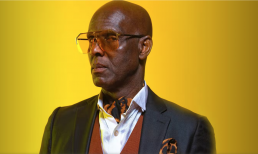
Do you ever wonder why people love to hate the fashion industry? I mean I love it, but I cannot speak for the rest of you. What I love about fashion is not even the industry, and as much as I’d like, it is not the style, beauty and glamour. What truly draws my attention to the fashion industry is the image it contributes to, the characterization of the personality at a time in history (in the case of fast fashion), or of all time (in the case of more classic apparels).
People talk a lot about the zeitgeist – which is basically the defining spirit or mood of a particular period of history as shown by the ideas and beliefs of the time. I believe fashion is the zeitgeist, fashion is the mood, and fashion is the emotion. Fashion is one of the most underrated elements of a social structure. People assume because it is just clothes and accessories, then it must be vain – whereas fashion is the backbone of a lot of ‘serious’ societal institutions.
Think of uniformed workers – policemen, pilots, doctors, nurses, soldiers, traffic wardens. When we look at them, we automatically perceive them as figures of authority, in a way, their image alters our behaviour, simply because of the symbolism the clothing represents. Take the same people out of the uniform and they become just any regular Joe. The different uniforms have different styles and a certain kind of beauty attached to their structure, color theme and texture. But ultimately, it is the image that the uniform evokes, that is more powerful.
Fashion is beyond the runway. Let me explain what that means. If you google the word ‘Fashion’ right now, there are two definitions you will find, the first is; Fashion – ‘a popular or the latest style of clothing, hair, decoration, or behaviour’, the second is; Fashion – ‘a manner of doing something’. In this article, I’m exploring what the second means in the context of identity, personality, style, perception, communication and culture.
Simply put, if society was broken down like the anatomy of a human, fashion will be the blood. The first time I understood the depth and reach of the fashion ecosystem – I was hanging out with my Landlord in Opebi, Lagos on a Sunday evening. He paints interesting works of art and has some degrees in Art History. He explained how fashion is literally the material element in the definition of culture (for context, culture is defined as the material and immaterial elements of any society). Think of any time in history, what do you remember it by? – the clothes, the make-up, the accessories, the styles, basically.
We criticise Nollywood and Hollywood for this constantly – “Oh this movie is set in the 70s? Why is her makeup that way? That was not the shoes of the 70s”. We determine time in history by the things we place the least emphasis on; cloth structure, shoes, bags, pieces of jewelry, makeup, slang, wig type, even scents.
At this point, if you’ve seen ‘Devil Wears Prada’ – you’d remember the scene where Meryl Streep schooled Anne Hathaway about how her dismissive opinions about fashion was totally unwarranted, because the scrumpy sweater Anne had on, was determined through the ‘frivolous’ activities that she thought were inconsequential.
Fashion is the most authentic expression of self, expression is art, art is history, and history determines the perception of a society. Fashion has certainly been my backbone. It reminds me of who exactly I think I am when my insecurities are doing a madness. It has also been a long journey to figuring out what my style is, because I have found out that not everything I admire will look good on my body structure.
Everyone that wants to be successful in life needs to go through the process of figuring out what their style is. It sounds so banal and unnecessary but trust me, dedicating the time to understand what works for you and makes you feel like your ideal self will totally change your life. You will feel more confident and certain. Study the feel of the types of textiles that make you feel at home, e.g. as much as I like jeans, it does not work for me at all, I have discovered that I feel more at home in soft and free textiles, makes me feel loved and appreciated.
Study colors, study prints, study cloth structures, study cuts – download Pinterest, feed the algorithm, and it will help you. You will know what you like, don’t shrink yourself to fit in, do mood boards of your unique selections, and invest some money into bringing them to life. No matter how imperfect or insecure you feel, this exercise will make you whole – you will feel worthy, worthy of opportunities, worthy of trying out, worthy by being enough, worthy by feeling enough, worth that can only be gotten from physically wearing clothes.

How Social Media Is Impacting The Future Of Cultural Taste
How Social Media Is Impacting The Future Of Cultural Taste
I have always been fascinated with the internet and its components. My first interaction with the interface was back in 2005 when Yahoo! Messenger was all the rage. My mother could not afford a family computer at the time so I’d always beg her for N100 ($1 – adjusted for inflation), to buy about 1 hour of computer time at the neighborhood cyber-cafe. The 1 hour usually sped by because I’d just surf and surf, brimming with excitement as I stared at the screen wide-eyed. For me, the internet was not just a tool of communication, it was a medium of socialization.
Since MySpace made history as the first internet company to hit 1 million active users, social media has been a concept and a product that has been loved and hated with the same intensity. Often by opposing demographics but never by opposing psychographics. The reason for demographic disparities is rooted in developmental differences, however, psychographic factors ensure that everyone has a place on social media. Everyone is welcome. That’s why group chats and Twitter factions exist, and it’s why Facebook favors organic group page engagements over business page announcements.
I know the various tech companies have caught major flak for social engineering platform dependence and people’s attention. However, it is important to highlight some of the good social media has done and will continue to do, especially acting as the melting pot for national and subcultures across the world to synthesize informal language, fashion and style, design and aesthetics.
The nature of social media is to promote exhibition, either for your thoughts or for your appearance, and the reward for exhibition is validation and replication. One person’s opinions turn to the belief of another person across the world, usually beyond propaganda, but focused around self-awareness, personal space and self-esteem. The personal style of a London babe is replicated experimentally by another babe in Lagos, Nigeria. When she is complimented by everyone for her unique sense of style, it reinforces her decision, and completes the process of behavioural change.
The amalgamation of cultural elements across the world is evident in the emergence of the positively rebellious nature of the Generation Z. They are not bound by the developmental parameters of the older generations simply because the process of social learning, which is a key learning principle in the development of conscious beings, is not limited to their immediate environmental mores and norms.
They can choose their tribe and instinctively absorb the different parts of diverse cultures that appeal to them; music, fashion, social beliefs, and well being are being subconsciously re-engineered for good. Ultimately, the coming generations can perceive adaptive sensations beyond the parameters of their physical environment – it now literally takes a global village to raise a child.
With the emergence of mainstream immersive technological products and platforms such as AI, VR and the Metaverse into the mainstream market place, the simulation of social interactions across cultures will become more real time and synthesized. I wonder what this eventual global cultural personality will mean for marketers, product and brand managers, PR and digital marketing people as regards segmentation and targeting. One thing is clear though, the internet has established itself as one of the forces of societal socialization

Sex Workers Are The Unsung Heroes In Nigeria
Sex Workers Are The Unsung Heroes In Nigeria
Okay so before we get into the nitty-gritty of the matter, I’d like to appeal to anyone that this will put off. The reason for this post is not to agitate, but to entertain, and subtly advocate.
Literature on Wikipedia estimates that there are about 40 – 42 million sex workers in the world, 80% of those are female, and they perform different services from stripping or lap dancing, to pornography, phone or internet sex, and basically any other exchange of sexual related services for financial or material gain.
The rise of OnlyFans has given a new coating to the world’s perception of sex work. If Cardi, Blac Chyna, and Safaree are making bank on the platform, then the thinking around sex work is that it is not so bad, maybe even a cool and alternative way to make money.
But wait, does this new perception of sex work apply to the ladies that work out of brothels, and stand on the streets? Are they accorded the same regard by society? Something needs to be said about that.
The first thing you should know is that Oxford Dictionary defined a job as ‘A paid position of regular employment’, which means that just like workers in the corporate world, the same factors that determine success/promotions are applicable in the business of sex work. Depending on branding, work ethics, and positioning, the client database for a typical sex worker could either be the heads of organizations or could be their drivers – either way, revenue is being generated.
The second thing you should know is, sex workers are actual ninjas when it comes to their chosen occupation. You think you are good at your job? LOL, you should see the way sex workers hustle. They will pull an all-nighter, every night, with a full face of makeup, on their feet, in heels, whilst still meeting their KPIs (of say 10 guys per night), and the bag secured.
The third thing you should know is, sex workers are emotionally intelligent and very street smart. Yes, it’s nice to know advanced algebra and be able to write a ten-page essay, but is that knowledge going to help you sharpen your negotiating skills? Is that knowledge going to help you properly maneuver in the boardroom, where human relations (no pun intended) is a key skill to be successful?.
The fourth thing you should know is, sex workers are probably ‘badder’ than James Bond, in terms of how brave they are. Every day, sex workers break the first and most important rule that was impressed upon us as children – “Don’t talk to, or follow strangers”. Do you know how scary it is to get into a car with a complete stranger not knowing where the car is headed, or what would possibly happen when you get there? Sex workers do it with a smile on their faces.
The final thing you should know is, sex workers are joyful givers, and I mean that literally. Yes, you have to pay a fee, but don’t you pay for Netflix and Apple Music? Also, guess what? They do a lot of CSR. There are so many men roaming the streets with needs and wants, without enough clout or swag to get it for free, and these brave set of women and men have chosen to take up the responsibility of meeting these needs, yet the society has chosen to ridicule them for it? SHAME!